Politics
Senate GOP block domestic terrorism bill
The bill passed the House along largely party lines last week
May 26, 2022 2:07pm
Updated: May 27, 2022 8:07am
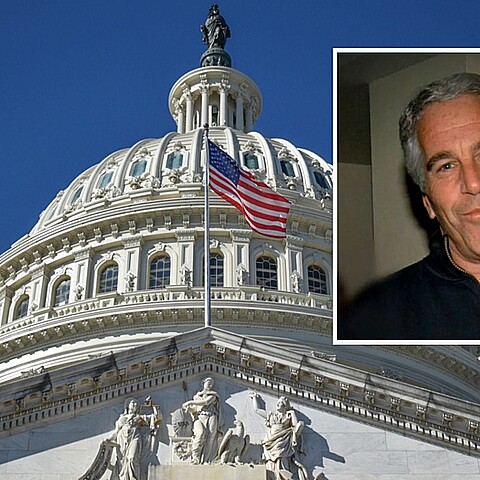
On Thursday, members of the Senate GOP blocked a bill that would create domestic terrorism offices within federal law enforcement agencies. The bill was a response to the recent mass shooting in Buffalo, New York that left 10 black people dead.
Majority Leader Chuck Schumer (D-N.Y.) positioned the Domestic Terrorism Prevention Act as an opportunity to vote on amendments to curb gun violence.
Prior to the vote, in a speech he took as an opportunity to slam Republican lawmakers in Texas, Schumer said on the floor, "The bill is so important because the mass shooting in Buffalo was an act of domestic terrorism. We need to call it what it is, domestic terrorism. It was terrorism that fed off the poison of conspiracy theories like White replacement theory."
The bill, which needed a 60 votes to move forward, was quashed by Republicans, who voted along party lines yielding a final tally of 47-47.
The measure would have established an interagency task force comprised of the Justice Department, Homeland Security Department, and FBI that would work to assess and combat the infiltration of white supremacists within law enforcement agencies.
Senate Republicans argued that new federal task forces are not necessary for the prosecution and monitoring of domestic terror because current law already exists to prosecute politically motivated violence.
Kentucky Sen. Rand Paul (R) called the proposed bill an "insult" to law enforcement and military members.
"It would be the Democrat plan to name our police as White supremacists and neo-Nazis. I met policemen throughout Kentucky and I’ve not met one policeman motivated or consumed with any kind of racial rage," he said. "What an insult it is to put a bill before the House and say our Marines are consumed with White supremacy and neo-Nazism."
Republicans also argued that the establishment of such a task force could lead to unlawful surveillance of Americans and a disproportionate handling of extremist groups on the right and left ends of the political spectrum.