Crime
After Maduro’s capture, armed paramilitary groups patrol Caracas, search phones and restrict press
ADN América spoke with a Venezuelan man in Caracas who was held for several hours after armed groups searched his mobile phone.

January 5, 2026 6:15pm
Updated: January 5, 2026 9:16pm
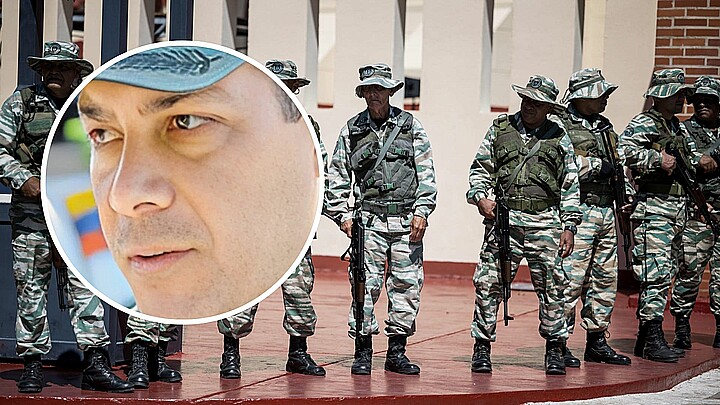
CARACAS — Across the South American country, many citizens are staying inside their homes as much as possible, fearing the movement of colectivos—pro-government Chavista paramilitary groups that have taken to the streets armed.
As a result, neighbors in several areas of Caracas say they have increasingly relied on WhatsApp groups to warn one another about irregular checkpoints and security operations carried out by regime agencies and pro-government armed groups, where citizens are stopped and searched, particularly at night.
Messages shared in the groups and reviewed by ADN America, warn of motorcycles and unmarked trucks detaining young men and taking them away. “They’re taking young people in black trucks,” one message read. Another warned: “Mothers are saying their sons were taken during the night.”
“In one of the neighborhood WhatsApp groups, people are saying that the DGCIM took young men overnight,” a person in Caracas told ADN América, speaking on condition of anonymity for security reasons.
The DGCIM (General Directorate of Military Counterintelligence) is Venezuela’s main military intelligence agency and has been repeatedly accused by human rights organizations of arbitrary detentions, coercive interrogations, and abuses, as well as operating unmarked checkpoints, sometimes alongside armed civilians.
The National Union of Press Workers of Venezuela (SNTP) also reported that at least 14 journalists were detained in Caracas—13 from international media outlets and news agencies and one from a national outlet. According to the union, during coverage of the opening of the National Assembly’s legislative session, journalists were barred from broadcasting live, recording video, or taking photographs.
On social media, multiple reports have surfaced of armed groups setting up checkpoints across Caracas to search mobile phones and vehicles. Independent journalists have also reported threats and intimidation for documenting developments in the country.
The heaviest presence of pro-government armed groups, known as Colectivos, has been reported along Avenida Boyacá, also known as the Cota Mil, a major roadway that runs through much of Caracas.
🚨 ¡ÚLTIMA HORA VENEZUELA! 🚨🇻🇪
— ¡DIFUNDELO YA! (@DIFUNDELOYA) January 5, 2026
URGENTE — ¡LO ÚLTIMO! 🇻🇪 🇺🇸
Colectivos Paramilitares del régimen activos por la Cota Mil.
Están revisando los teléfonos.
🔴 EVITEN PASAR POR ALLÍ. 🔴 pic.twitter.com/gfVEWxTKfX
🇻🇪 | URGENTE: Colectivos armados del régimen chavista intimidan a los venezolanos en las calles: les piden los celulares y amenazan a periodistas.pic.twitter.com/gPd8fAZEcP
— Alerta Mundial (@AlertaMundoNews) January 5, 2026
Reporters from ADN América in Venezuela interviewed a Venezuelan man in his mid-30s who said he was detained for several hours after armed groups searched his mobile phone.
“I was driving along a street in eastern Caracas when a group of armed motorcyclists appeared. We were traveling in opposite directions, but when they saw me, they turned around and ordered me to stop,” said the man, who asked to remain anonymous.
“They began going through my phone and found a conversation with my mother in which she was upset with the government. After reading it, they said they were going to take me to El Helicoide for incitement to hatred,” he added.
According to his account, as they were preparing to take him away, his brother-in-law recognized him and stopped, making a series of calls to family members. “After several hours, we managed to reach someone who spoke to them so they would let me go,” he said.
Following the incident, the man said he deleted all conversations, photos, and content from his phone that could put him at risk. “Now I’m afraid. I try not to post on social media or have conversations about the government,” he said.
The reports and security operations began to intensify two days after the capture and removal from the country of Nicolás Maduro and his wife, Cilia Flores, following a U.S. operation in Venezuela.
While thousands of Venezuelans abroad have gathered to celebrate Maduro’s capture, those who remain inside the country have largely fallen silent, fearing detention by intelligence agencies and armed groups that continue to defend the regime.